
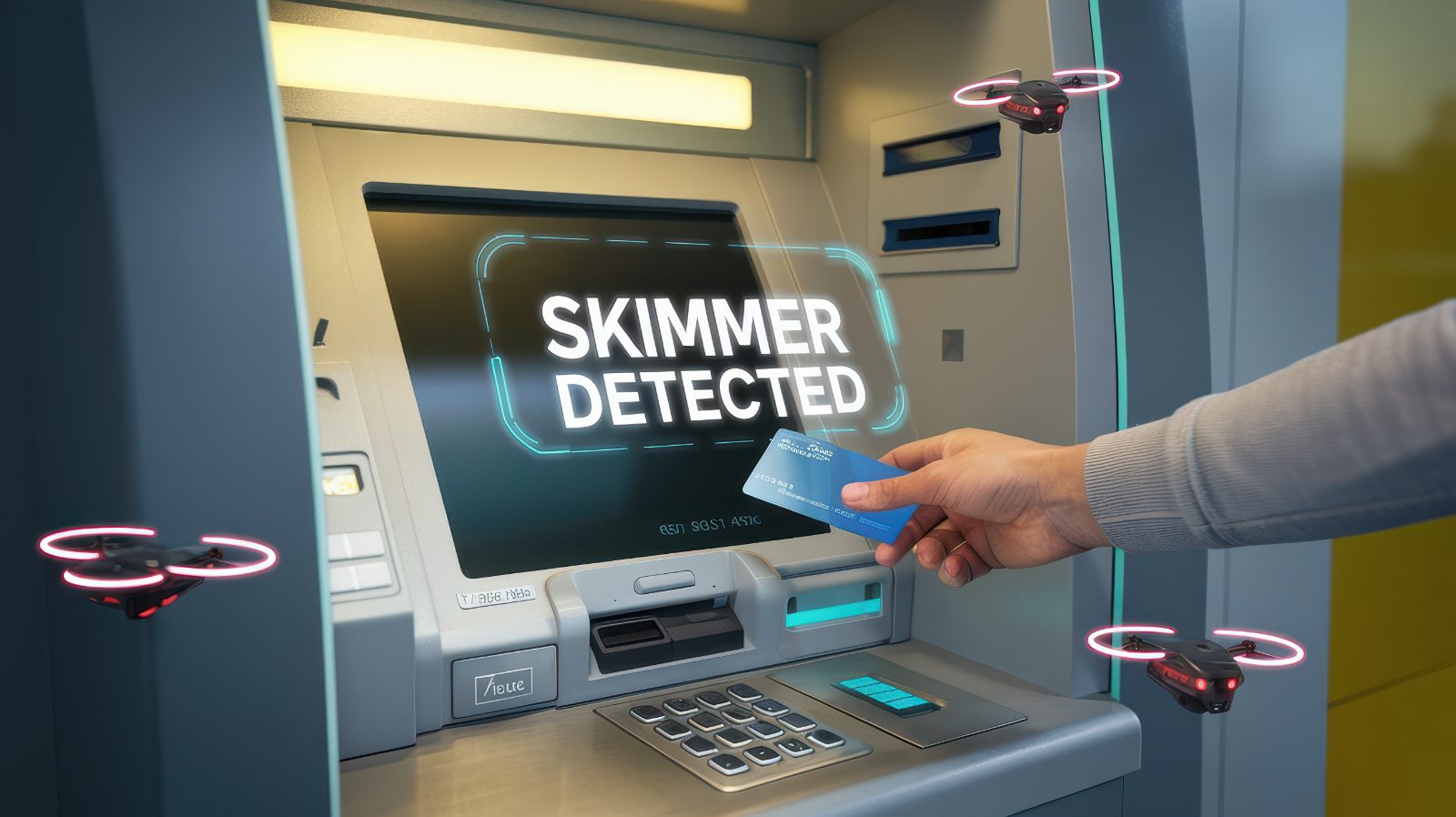
ATM/Payment Card Skimming Exploits
By Fred Flamer
ATM/Card Skimming is a form of financial fraud where criminals secretly capture your debit or credit card information from an ATM, gas pump, or payment terminal. The goal is simple: steal your card information so they can create counterfeit cards or commit fraudulent transactions.
The most common method involves attaching a hidden card-reading device, known as a skimmer, over the machine's legitimate card reader. As you insert your card, the skimmer secretly copies the information stored on the card's magnetic stripe. Criminals often pair the skimmer with a hidden pinhole camera or a fake keypad to capture your PIN as you enter it.
While researching this topic, I came across something I wasn't very familiar with myself—shimmers, also known as deep-insert skimmers.
Unlike traditional skimmers that fit over the outside of the card reader, shimmers are ultra-thin devices inserted deep inside the card slot. They are much harder to detect because they are completely hidden from view. Instead of simply copying magnetic stripe data, they attempt to intercept the communication between the payment terminal and the card's EMV chip during a chip transaction.
That naturally leads to another question...
What is an EMV Chip?
You deserve an explanation, so here it is.
EMV stands for:
- Europay
- Mastercard
- Visa
These three companies originally developed the global standard for chip-enabled payment cards.
The EMV chip is that small metallic square embedded in your debit or credit card. Believe it or not, it's actually a tiny computer.
Whenever you insert—or even tap—your card, the payment terminal communicates with the EMV chip. Rather than sending the same account information every time, the chip generates a unique cryptographic code (called a dynamic cryptogram) for that specific transaction. Your bank verifies that one-time code before approving the purchase.
This is why EMV technology is far more secure than the old magnetic stripe.
The magnetic stripe always transmitted the exact same account information. If a criminal copied—or skimmed—that information, they could create a counterfeit card.
The EMV chip changed the game.
Every transaction creates a brand-new security code that can only be used once. I like to think of it this way: every EMV transaction is an island unto itself—completely unique and separate from every other transaction.
What Information Are Criminals Trying to Steal?
Their primary targets are:
- Card number
- Expiration date
- PIN
- Card Verification Value (CVV/CVC) when obtainable
- Other account information that can be used to commit fraud
Once they obtain enough information, criminals may:
- Clone magnetic stripe cards
- Withdraw cash from ATMs
- Make fraudulent purchases
- Sell stolen card data on underground criminal marketplaces
Where Are Skimmers Commonly Found?
Unfortunately, almost anywhere a card is swiped.
Some of the more common locations include:
- ATMs
- Gas pumps
- Convenience stores
- Tourist attractions
- Poorly monitored payment terminals
Warning Signs of a Compromised Card Reader
Before inserting your card, take a few seconds to inspect the machine.
Look for:
- A card reader that feels loose or moves when lightly tugged
- A crooked or unusually thick keypad
- Different colors or mismatched materials on machine components
- Resistance when inserting your card
- Tiny pinhole cameras aimed at the keypad
- Broken or missing security seals
- Anything that simply doesn't look or feel right
Trust your instincts. If something seems suspicious, use another machine.
What the EMV Chip Protects Against
The EMV chip is extremely effective at preventing:
- Counterfeit card fraud
- Card cloning
- Many forms of traditional card skimming
What the EMV Chip Does Not Protect Against
Although EMV technology is an enormous improvement, it isn't a cure-all.
It does not protect you from:
- Card-not-present fraud (online shopping)
- Phishing scams
- Fake shopping websites
- Criminals who steal your physical card
- Account takeover attacks
- Social engineering scams
Whether you insert your card or simply tap to pay, both methods use EMV technology and generate unique transaction data, making both options highly secure.
How to Protect Yourself
- Cover your PIN while entering it.
- Lightly tug on the card reader before using it.
- Use your EMV chip or tap-to-pay whenever possible instead of swiping.
- Avoid isolated or poorly lit ATMs.
- Use indoor ATMs owned by banks whenever possible.
- Monitor your bank and credit card statements frequently.
- Enable transaction alerts through your bank.
- Immediately lock or freeze your card if you notice suspicious activity.
- Report fraudulent transactions to your bank as soon as possible.
Final Thoughts
ATM and card skimming remain some of the most common forms of financial fraud because criminals count on us being in a hurry. Fortunately, protecting yourself doesn't require advanced technical knowledge. A few extra seconds spent inspecting a payment terminal, covering your PIN, and using your EMV chip or tap-to-pay can significantly reduce your risk.
I hope you learned a little something from this article because I certainly learned a few things myself while putting it together for you!
-Fin-
#SeniorSecured #ATMSkimming #CardSkimming #PaymentCardSafety #FraudPrevention
© 2026 Fred Flamer. All Rights Reserved.