
By Fred Flamer
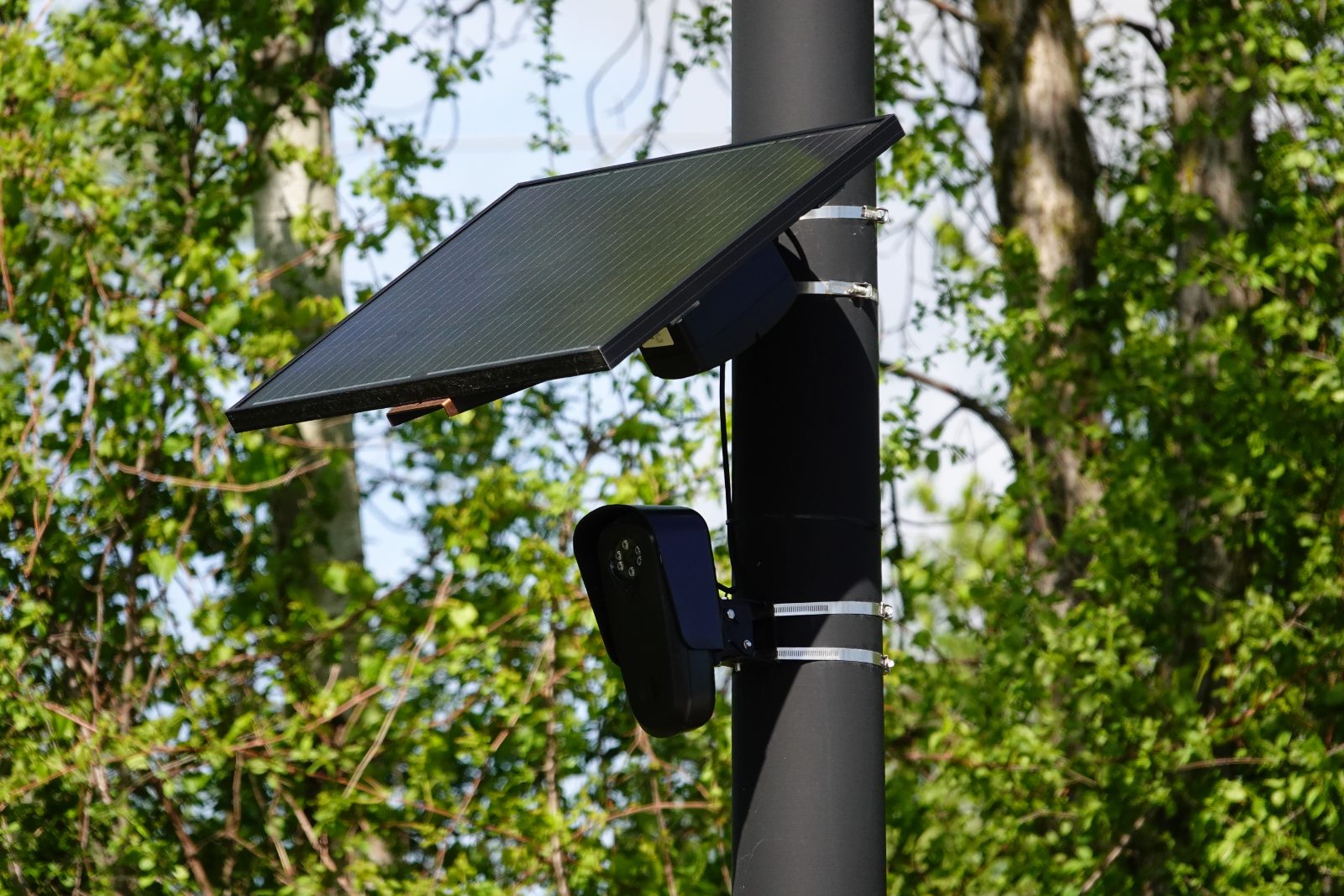
There have been a lot of conversations happening lately regarding Flock cameras. After being personally asked about where these cameras are being placed, what information they collect, and what exactly that information is being used for, my instincts whispered:
"Hey...this subject might be of interest. Put something together and get it out there!"
So, here it is.
First, a disclaimer: Any opinions that I express in this article are my personal opinions and my opinions alone. Now that we have that out of the way, let's talk about Flock cameras and ALPRs.
Believe it or not, the company responsible for these devices isn't even a decade old. Flock Safety was founded in 2017 in Atlanta, Georgia. Part of the inspiration behind the company came from frustration with property crime occurring in a local community—and the difficulty law enforcement often faces trying to solve these types of crimes.
Think about it.
Property crimes are often crimes of opportunity. The offender may have absolutely no connection to the victim. There may be no witnesses, no obvious suspect, and very little physical evidence. Imagine the manpower, time, and resources required to investigate a crime from scratch when investigators have virtually nothing to work with.
You first have to identify a suspect or person of interest. Then you have to develop sufficient evidence connecting that individual to the crime. And ultimately, you hope the investigation produces enough admissible evidence to support a successful prosecution.
That's a tall order.
In communities experiencing these crimes repeatedly, the problem becomes even more difficult. That challenge helped inspire what eventually became Flock Safety.
The company's early cameras were reportedly assembled by its founders around a dining-room table. Their purpose was relatively straightforward: capture vehicles and license plates entering or traveling through an area and provide investigators with another potential piece of the puzzle.
These systems evolved into what we commonly call ALPRs—Automated License Plate Readers.
ALPR systems can capture images of vehicles, identify license plates, and associate those observations with information such as the approximate time and location where the vehicle was detected.
I'm going to stop right there with the history lesson because this is where things get interesting.
The Good, The Bad, and The Flock
There is considerable controversy surrounding the deployment of Flock cameras and ALPR technology across the United States.
And understandably so.
Almost every powerful technology brings both benefits and risks. ALPR technology is no different.
On the positive side, Flock cameras can be incredibly valuable investigative tools. Information obtained from these systems has helped investigators develop leads in cases ranging from property crimes and stolen vehicles to much more serious crimes, including kidnapping and homicide.
Sometimes investigators aren't looking for the entire answer.
They're simply looking for the next clue.
A vehicle description.
A license plate.
A direction of travel.
A location.
A timestamp.
One small piece of information can sometimes turn an investigation with virtually nowhere to go into an investigation with somewhere to start.
From that perspective, I completely understand the value of the technology.
But now we have to talk about the other side.
With Great Data Comes Great Responsibility
The concern isn't necessarily that ALPR technology exists.
The concern is what happens to the data after it is collected, who has access to it, how long it is retained, who it can be shared with, and what purposes it can ultimately be used for.
There have been documented controversies involving ALPR information being accessed or used in ways that have generated legitimate questions about privacy, oversight, information sharing, and appropriate use.
I also personally have questions about the sheer number of cameras being deployed throughout the country.
But here's the reality:
The cat is already out of the bag.
The toothpaste isn't going back into the tube.
This technology exists. It is being deployed. It has demonstrated legitimate law-enforcement and public-safety value, and I don't believe ALPR technology is simply going to disappear.
So, in my opinion, the conversation now needs to mature beyond simply asking:
"Should this technology exist?"
We also need to be asking:
"How do we govern it responsibly?"
And that is where my cybersecurity and governance instincts kick in.
Governance Is The Key
If society is going to coexist with technology this powerful, then the policies governing the technology need to be just as powerful.
ALPR information should be managed through clearly defined policies within each jurisdiction. There should also be an appropriate level of transparency so the public understands, at least generally, how the technology is being used and what protections exist around the information being collected.
At a minimum, I believe a responsible ALPR program should include:
- Strict access controls — Not everyone with a username and password should automatically have access to ALPR information.
- Role-Based Access Control (RBAC) — Access should be limited according to legitimate job responsibilities and operational need.
- Comprehensive audit logging — Searches and access should create an audit trail documenting who accessed the system, when they accessed it, and what activity occurred.
- Automated and human audit review — Logs aren't particularly useful if nobody is reviewing them. Suspicious or unusual activity should generate alerts and receive follow-up.
- Clear data-retention limits — Information shouldn't simply be retained indefinitely because storage is available. There should be a legitimate, documented reason for keeping it.
- Data minimization — Collect and retain what is necessary to accomplish the legitimate public-safety mission—and no more than necessary.
- Strict acceptable-use policies — ALPR information should be used only for clearly defined, lawful, authorized purposes.
- Controlled information sharing — There should be rules governing when ALPR information can be shared with outside agencies and under what circumstances.
- Regular access reviews — When an employee transfers, changes responsibilities, or leaves an organization, their access should be modified or terminated accordingly.
- Meaningful oversight and accountability — There should be periodic reviews of the program, including policy compliance, system access, information sharing, retention practices, complaints, and potential misuse.
And I would go one step further.
Where appropriate, I believe community representation should have a seat somewhere in the oversight process.
Why?
Because public trust matters.
Technology Isn't The Enemy. Misuse Is.
I don't believe Flock cameras are inherently "good" or "bad."
They're tools.
A hammer can build a house or break a window.
A database can help solve a kidnapping or become a tremendous privacy concern if access to it isn't properly controlled.
Technology doesn't eliminate the need for accountability—it increases it.
That is why conversations surrounding ALPRs shouldn't simply become arguments between "pro-police" and "anti-surveillance" camps.
There is legitimate ground in the middle.
We can acknowledge the tremendous investigative value of ALPR technology while simultaneously demanding strong privacy protections, accountability, transparency, and governance.
Those ideas are not mutually exclusive.
In fact, I would argue that responsible governance is exactly what allows useful technology to maintain the public trust necessary for it to continue being useful.
The technology is here.
The cameras are here.
The data is being generated.
So perhaps the most important question isn't:
"What The Flock?"
Maybe the better question is:
"Who's watching the watchers—and what rules are they required to follow?"
If you learned something from this article, I am genuinely thrilled! I learn plenty myself from the research that I do while putting these pieces together.
Thank you in advance for taking the time to consume them.
Stay informed. Stay curious. And never be afraid to ask questions about the technology operating around you.
-Fin-
#WhatTheFlock #ALPR #SeniorSecured #ResponsibleGovernance #SocialContract
© 2026 Fred Flamer. All Rights Reserved.