
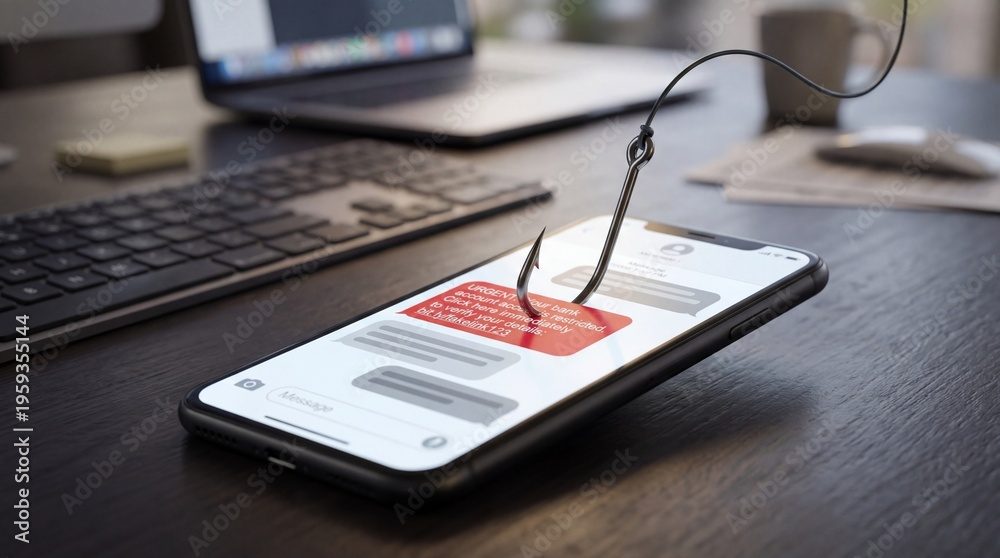
Smishing (SMS Text Message Scams)
By Fred Flamer
"Smishing" is another form of Social Engineering that is closely related to phishing and vishing.
While phishing typically occurs through email and vishing occurs through voice calls, smishing occurs through SMS text messages.
In a smishing attack, scammers send fraudulent text messages designed to trick victims into clicking malicious links, downloading malware, revealing sensitive information, or providing login credentials and Multifactor Authentication (MFA) codes.
Some of the most common smishing scams involve:
- Fake package delivery notifications
- Unpaid toll road fees
- Fraudulent bank alerts
- Jury duty scams
- Government impersonation scams
- Fake account verification requests
- Requests for MFA or authentication codes
The goal is always the same: convince the victim to act before they have time to think.
The Unpaid Toll Scam
One smishing scam that exploded onto the scene several years ago was the "Unpaid Toll Text" scam.
Victims received text messages claiming they owed a small toll fee, often in the range of five to thirty dollars. The messages appeared to come from legitimate toll systems such as E-ZPass, SunPass, FasTrak, and other regional toll authorities.
The scam was surprisingly successful.
Why?
Because the amounts were relatively small.
Many people thought:
"It's only a few dollars."
"Maybe I forgot to pay."
"I'll just take care of it now."
And that's exactly what the scammers were counting on.
I believe the small fee amounts played a major role in the scam's success. People were far less likely to question a five-dollar charge than a five-hundred-dollar charge.
The sinister objective behind these scams was often much larger than the unpaid toll itself.
When victims clicked the link and entered payment information, scammers could collect credit card numbers, billing information, and other sensitive data. That information could then be used later for additional fraudulent activity.
In other words, the toll fee was often just the bait.
Your personal and financial information was the real prize.
Why Smishing Continues to Grow
Smishing has become increasingly popular because it is inexpensive and easy for criminals to execute.
A scammer can send thousands of text messages in a matter of minutes.
It is the classic numbers game.
If a criminal sends 1,000 text messages and only a small percentage of recipients respond, they may still end up with dozens or even hundreds of potential victims.
Rinse and repeat.
Unfortunately, these messages are not only invasive and annoying, but they can also be extremely effective when they catch someone off guard.
Ways to Protect Yourself from Smishing
• Never provide passwords, Multifactor Authentication (MFA) codes, or other sensitive information through text messages.
• Be skeptical of unexpected text messages, especially those creating urgency or demanding immediate action.
• Verify requests independently by contacting the organization through a phone number or website you have previously used and trust.
• Do not click links contained in suspicious text messages.
• If you choose to visit a website associated with a text message, carefully inspect the web address and verify that it belongs to the legitimate organization.
• Pay attention to scam alerts and fraud warnings issued by banks, government agencies, and trusted organizations.
• Delete suspicious messages and report them when appropriate.
Final Thoughts
The next time you receive a text message claiming that you owe money, need to verify an account, or must act immediately, stop and ask yourself:
Was I expecting this message?
Do I know who sent it?
Can I verify this another way?
Remember, scammers succeed when they convince you to act before you think.
Slow down.
Be skeptical.
Verify independently.
Those simple habits can help protect you from becoming the next victim of a smishing attack.
**SMS = Short Message Service
-Fin-
#SeniorSecured #SmishingScams #TextMessageScams #ThinkBeforeYouClick #ScamAwareness
© 2026 Fred Flamer. All Rights Reserved.